
Yoga and Exercise: The Perfect Combination for a Healthy Lifestyle in 2026
In today’s digital age, most people spend 8-12 hours daily sitting in front of screens. This sedentary lifestyle has triggered a health crisis—70% of adults now experience chronic stress, while obesity rates continue climbing worldwide. The solution isn’t complicated: combine yoga and exercise into your daily routine. This powerful duo tackles both physical fitness and mental wellness, creating lasting health benefits that no single activity can achieve alone. At FitCareZone, we’ve helped thousands of people transform their health good through evidence-based fitness guidance, and this complete guide reveals exactly how to use yoga and exercise together for maximum results.
This complete guide reveals how yoga and exercise work together to transform your body and mind. You’ll discover science-backed benefits, practical routines, and expert tips that make fitness sustainable for busy lifestyles.
Table of Contents
- What Makes Yoga and Exercise Different?
- Science-Backed Benefits of Regular Exercise
- Proven Health Benefits of Yoga Practice
- Why Combining Yoga and Exercise Creates Better Results
- Sample Daily Routine for Beginners
- Common Mistakes That Block Your Progress
- Best Nutrition Plan for Yoga and Exercise
- Long-Term Benefits You’ll Experience
What Makes Yoga and Exercise Different?
Many people ask: “Should I do yoga or exercise?” The truth is, you need both—but for different reasons.
Exercise targets your cardiovascular system and skeletal muscles through repetitive movements. When you run, lift weights, or cycle, your heart rate increases, calories burn, and muscles grow stronger. Exercise primarily improves physical performance metrics like strength, speed, and endurance.
Yoga, on the other hand, works as a holistic mind-body practice. Through asanas (physical postures), pranayama (breath control), and dhyana (meditation), yoga reduces stress hormones, balances your nervous system, and increases body awareness. While exercise builds external strength, yoga cultivates internal balance and mental resilience.
Think of exercise as charging your body’s battery, while yoga fine-tunes the entire system. Both are essential—neither is superior.
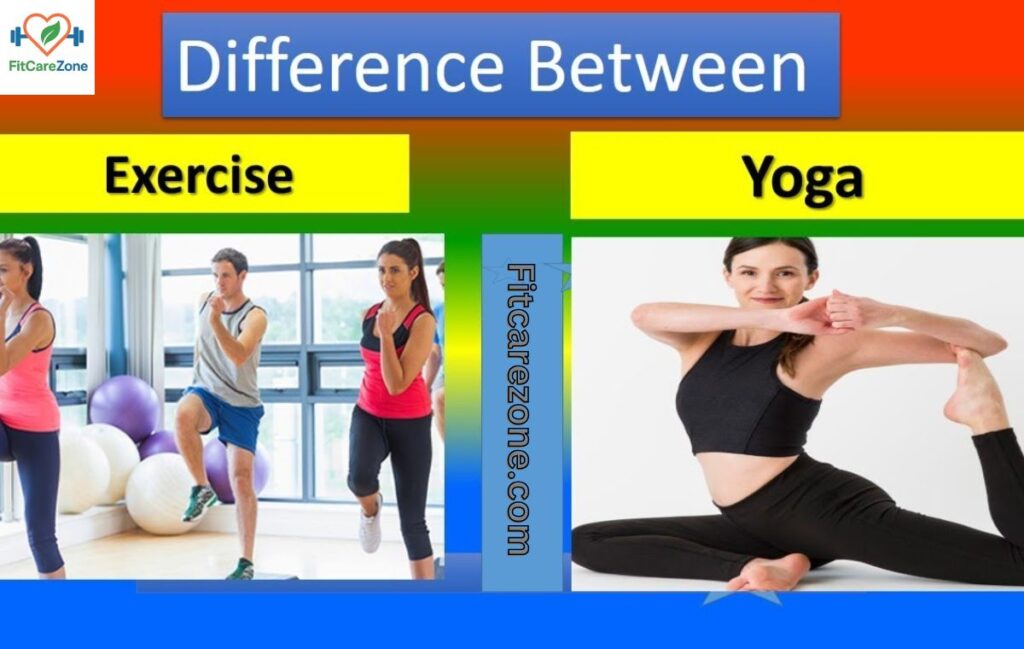
Key Differences at a Glance
| Aspect | Exercise | Yoga |
|---|---|---|
| Primary Focus | Physical fitness, muscle building | Mind-body connection, flexibility |
| Intensity Level | Moderate to high | Low to moderate |
| Breathing Pattern | Increased, often irregular | Controlled, rhythmic |
| Equipment Needed | Often requires weights, machines | Minimal (just a yoga mat) |
| Mental Benefits | Stress relief through endorphins | Deep relaxation, mindfulness |
| Best Time | Morning or evening | Morning (traditional) or evening |
| Impact on Joints | Can be high-impact | Low-impact, joint-friendly |
Science-Backed Benefits of Regular Exercise
Research from the American Heart Association shows that 150 minutes of moderate exercise weekly reduces cardiovascular disease risk by 35%. Here’s what regular physical activity does for your body:
1. Strengthens Your Cardiovascular System
Exercise trains your heart to pump blood more efficiently. Activities like brisk walking, jogging, swimming, and cycling strengthen cardiac muscles and improve circulation. Studies show that people who exercise regularly have 40% lower risk of heart attacks compared to sedentary individuals.
How it works: During aerobic exercise, your heart rate increases from a resting 60-80 bpm to 120-160 bpm, forcing cardiac muscles to work harder and adapt over time.
2. Builds Lean Muscle Mass and Bone Density
Resistance training triggers muscle protein synthesis, which builds new muscle tissue. Weight-bearing exercises also stimulate osteoblasts (bone-building cells), increasing bone mineral density by up to 3% annually.
Best exercises for muscle growth:
- Compound movements: squats, deadlifts, bench press
- Bodyweight training: push-ups, pull-ups, dips
- Resistance bands and free weights
3. Accelerates Fat Loss and Metabolism
High-intensity interval training (HIIT) creates an “afterburn effect” where your body continues burning calories 24-48 hours post-workout. Regular exercise increases your basal metabolic rate (BMR), meaning you burn more calories even at rest.
Calorie burn comparison:
- 30 minutes running (6 mph): 300-400 calories
- 30 minutes cycling: 250-350 calories
- 30 minutes strength training: 150-250 calories
4. Boosts Energy and Reduces Fatigue
Exercise increases mitochondrial density in cells, improving your body’s ability to produce ATP (energy currency). Research from the University of Georgia found that sedentary individuals who started exercising reported 65% improvement in energy levels within six weeks.
5. Improves Sleep Quality
Physical activity helps regulate your circadian rhythm and increases deep sleep duration by 18-22%. People who exercise fall asleep 55% faster and experience fewer nighttime awakenings.
Timing matters: Exercise at least 3-4 hours before bedtime for optimal sleep benefits.
6. Enhances Cognitive Function and Memory
Aerobic exercise increases brain-derived neurotrophic factor (BDNF), a protein that supports neuron growth and protects against cognitive decline. Studies show that regular exercisers have 40% lower risk of developing Alzheimer’s disease.
7. Strengthens Immune System
Moderate exercise increases white blood cell production and antibody activity. Research indicates that people who exercise 30 minutes daily experience 43% fewer sick days annually.
Proven Health Benefits of Yoga Practice
The National Institutes of Health recognizes yoga as an evidence-based complementary therapy. Over 300 million people worldwide practice yoga for these scientifically-validated benefits:
1. Reduces Chronic Stress and Anxiety
Yoga activates your parasympathetic nervous system (rest-and-digest mode), which lowers cortisol levels by 25-30%. A 2019 study in the Journal of Clinical Psychology found that 12 weeks of yoga reduced anxiety symptoms by 52% in participants.
How it works: Deep breathing techniques like pranayama trigger the vagus nerve, signaling your brain to release calming neurotransmitters (GABA, serotonin).
2. Increases Flexibility and Joint Mobility
Regular yoga practice improves range of motion by 35-40% within 8-12 weeks. This happens because yoga poses gently stretch connective tissues, increase synovial fluid in joints, and lengthen muscle fibers.
Top poses for flexibility:
- Forward folds (Paschimottanasana) for hamstrings
- Pigeon pose (Eka Pada Rajakapotasana) for hips
- Cobra pose (Bhujangasana) for spine
3. Corrects Posture and Relieves Back Pain
80% of adults experience back pain during their lifetime, often due to poor posture from prolonged sitting. Yoga strengthens core muscles and spinal erectors while releasing tension in hip flexors and chest muscles.
A Harvard Medical School study found that yoga was as effective as physical therapy for chronic lower back pain relief.
4. Strengthens Immune Response
Specific yoga practices reduce inflammation markers (C-reactive protein) by 20% and increase immune cell activity. Inversions like shoulder stand (Sarvangasana) improve lymphatic drainage, helping your body remove toxins more efficiently.
5. Improves Focus, Concentration, and Mental Clarity
Meditation and mindfulness practices in yoga increase gray matter density in the prefrontal cortex (decision-making center) and hippocampus (memory center). Regular practitioners show 15-20% improvement in attention span and working memory.
6. Balances Hormones Naturally
Yoga regulates endocrine function, particularly beneficial for thyroid health, insulin sensitivity, and reproductive hormones. Research shows yoga reduces symptoms of polycystic ovary syndrome (PCOS) and menopause by 40-50%.
7. Lowers Blood Pressure and Heart Rate
Restorative yoga poses activate the relaxation response, reducing systolic blood pressure by 5-10 mmHg and diastolic by 3-5 mmHg. This effect is cumulative and improves with consistent practice.
8. Enhances Body Awareness and Mind-Body Connection
Yoga develops interoception—the ability to sense internal bodily states. This heightened awareness helps you recognize hunger cues, stress signals, and emotional patterns, leading to better self-regulation.

Why Combining Yoga and Exercise Creates Better Results
When you practice both yoga and exercise, you activate complementary biological pathways that create synergistic effects:
The Science Behind the Synergy
Exercise stimulates your sympathetic nervous system (fight-or-flight), releasing adrenaline and increasing metabolic rate. This builds physical resilience and strength.
Yoga engages your parasympathetic nervous system (rest-and-repair), promoting recovery and reducing inflammation. This prevents overtraining and burnout.
Together, they create hormonal balance. Exercise increases testosterone and growth hormone (muscle building), while yoga reduces cortisol (stress hormone). This combination optimizes body composition better than either practice alone.
Real-World Benefits of Combined Practice
- Faster Recovery Between Workouts Yoga increases blood flow to muscles, delivering oxygen and nutrients that speed recovery by 30-40%. This allows you to train more frequently without injury.
- Injury Prevention Athletes who add yoga to their training reduce injury risk by 45%. Yoga improves proprioception (spatial awareness) and corrects muscle imbalances that lead to strains.
- Better Athletic Performance Professional sports teams now include yoga in training programs. NBA players report improved vertical jump and flexibility; runners improve their times by strengthening hip flexors through yoga.
- Enhanced Mind-Muscle Connection Yoga teaches body awareness that translates to better exercise form. You’ll engage muscles more effectively during workouts, maximizing strength gains.
- Complete Fitness Coverage Exercise builds cardiovascular endurance and muscular strength. Yoga adds flexibility, balance, and mental resilience. Together, they address all five components of physical fitness.
Sample Weekly Schedule
Monday: 30 min cardio + 15 min yoga stretching
Tuesday: Strength training (upper body) + 10 min breathing exercises
Wednesday: 45 min yoga flow (Vinyasa)
Thursday: HIIT workout + 15 min restorative yoga
Friday: Strength training (lower body) + 10 min meditation
Saturday: 60 min mixed (30 min run + 30 min Hatha yoga)
Sunday: Gentle yoga or active recovery walk
Sample Daily Routine for Beginners (30-Minute Protocol)
This beginner-friendly routine requires no equipment and takes just 30 minutes. Practice it 5-6 days weekly for best results.
Phase 1: Warm-Up (5 minutes)
Start by preparing your body and preventing injury:
- Neck rolls – 10 rotations each direction
- Shoulder circles – 15 forward, 15 backward
- Arm swings – 20 total (cross-body and overhead)
- Hip circles – 10 each direction
- Ankle rotations – 10 each foot
- Cat-Cow stretches – 10 repetitions (warms up spine)
Phase 2: Exercise Component (12 minutes)
Perform each exercise for 45 seconds with 15 seconds rest:
Round 1:
- Jumping jacks or marching in place
- Bodyweight squats
- Push-ups (modify on knees if needed)
- Mountain climbers or knee tucks
Round 2:
- High knees or step-ups
- Lunges (alternating legs)
- Plank hold (or forearm plank)
- Bicycle crunches
Round 3:
- Burpees (or step-back burpees)
- Glute bridges
- Tricep dips (using chair)
- Russian twists
Phase 3: Yoga Sequence (10 minutes)
Standing Poses (4 minutes):
- Tadasana (Mountain Pose) – 30 seconds Stand tall, feet hip-width apart, arms at sides. Ground through all four corners of feet. Engage thighs, lift kneecaps, lengthen spine.
- Surya Namaskar (Sun Salutation) – 3 rounds, 90 seconds each Flow through: Mountain → Forward Fold → Half-way Lift → Plank → Chaturanga → Upward Dog → Downward Dog → Forward Fold → Mountain
Floor Poses (4 minutes): 3. Bhujangasana (Cobra Pose) – 45 seconds Lie on stomach, hands under shoulders. Press into hands, lift chest, keep elbows slightly bent. Opens chest and strengthens back.
- Balasana (Child’s Pose) – 60 seconds Knees wide, sit back on heels, arms extended forward. Rest forehead on mat. Deeply relaxing for lower back.
- Setu Bandhasana (Bridge Pose) – 45 seconds Lie on back, feet flat, knees bent. Press feet down, lift hips. Strengthens glutes and opens hip flexors.
- Spinal Twist – 30 seconds each side Lie on back, bring right knee to chest, twist to left. Releases tension in spine.
Final Relaxation (2 minutes): 7. Savasana (Corpse Pose) – 2 minutes Lie flat on back, arms at sides, palms up. Close eyes, release all tension. This final pose is crucial—it allows your nervous system to integrate the practice.
Phase 4: Pranayama (Breathwork) (3 minutes)
Nadi Shodhana (Alternate Nostril Breathing):
- Sit comfortably, spine straight
- Close right nostril, inhale through left (4 counts)
- Close both, hold breath (4 counts)
- Close left nostril, exhale through right (4 counts)
- Inhale through right, hold, exhale through left
- Repeat for 3 minutes
Benefits: Balances brain hemispheres, reduces anxiety, improves focus
Common Mistakes That Block Your Progress
Even motivated people make these errors that sabotage results:

1. Skipping Warm-Up and Cool-Down
The problem: Jumping into intense exercise with cold muscles increases injury risk by 70%. Your muscles need 5-10 minutes to increase temperature and flexibility.
The fix: Always start with dynamic stretching (leg swings, arm circles) and end with static stretches or yoga poses.
2. Overtraining Without Recovery
The problem: Muscles grow during rest, not during workouts. Exercising intensely 7 days weekly leads to chronic cortisol elevation, which breaks down muscle tissue and suppresses immune function.
The fix: Schedule 1-2 rest days weekly. Use active recovery (walking, gentle yoga) on these days.
3. Ignoring Nutrition and Hydration
The problem: You can’t out-exercise a poor diet. Exercise burns 300-500 calories, but a single fast-food meal contains 1,000+ calories.
The fix: Follow the 80/20 rule—eat whole foods 80% of the time. Drink 0.5-1 ounce of water per pound of bodyweight daily (more if exercising).
4. Poor Form and Technique
The problem: Bad form reduces effectiveness and causes injuries. Rounded backs during squats stress the spine; flared elbows during push-ups strain shoulders.
The fix: Start with bodyweight exercises, master the movement pattern, then add resistance. Consider working with a trainer for 3-5 sessions to learn proper form.
5. Inconsistent Practice
The problem: Working out intensely once weekly gives worse results than moderate exercise 5 times weekly. Your body adapts to consistent stress, not occasional effort.
The fix: Commit to 20-30 minutes daily rather than 2-hour weekend sessions. Small, consistent actions create lasting change.
6. Comparing Your Progress to Others
The problem: Social media creates unrealistic expectations. Most fitness influencers train 2+ hours daily and follow strict diets—not sustainable for average people.
The fix: Track your own progress weekly (strength gains, flexibility improvements, energy levels). Compete with yesterday’s version of yourself.
7. Holding Your Breath During Exercise
The problem: Breath-holding during exertion spikes blood pressure and reduces oxygen delivery to muscles, limiting performance.
The fix: Exhale during exertion (pushing/lifting phase), inhale during release (lowering phase).
8. Neglecting Flexibility Training
The problem: Tight muscles restrict range of motion, reducing exercise effectiveness and increasing injury risk.
The fix: Dedicate 10-15 minutes to yoga stretching after every workout when muscles are warm.
Best Nutrition Plan for Yoga and Exercise
Your diet provides the raw materials for muscle repair, energy production, and recovery. Follow these evidence-based nutrition principles:
Macronutrient Distribution
Protein (25-30% of calories):
- Supports muscle repair and growth
- Aim for 0.8-1g per pound of bodyweight
- Best sources: eggs, chicken breast, fish, Greek yogurt, lentils, chickpeas, tofu
Carbohydrates (40-50% of calories):
- Primary fuel for exercise
- Focus on complex carbs with low glycemic index
- Best sources: oatmeal, brown rice, quinoa, sweet potatoes, whole wheat bread, fruits
Healthy Fats (20-30% of calories):
- Essential for hormone production and joint health
- Best sources: avocados, nuts, seeds, olive oil, fatty fish (salmon, mackerel)
Pre-Workout Nutrition (1-2 hours before)
Eat easily digestible carbs with moderate protein:
- Banana with almond butter
- Oatmeal with berries
- Greek yogurt with honey
- Whole grain toast with eggs
Why it matters: Provides steady energy without causing digestive discomfort during exercise.
Post-Workout Nutrition (within 30-60 minutes)
Combine protein and carbs in a 1:3 ratio to maximize recovery:
- Protein shake with banana
- Chicken with sweet potato
- Tuna sandwich on whole grain bread
- Smoothie bowl with protein powder
Why it matters: The post-workout “anabolic window” is when muscles absorb nutrients most efficiently.
Hydration Strategy
Daily baseline: Bodyweight (lbs) ÷ 2 = ounces of water needed
Example: 150 lbs person needs 75 oz (9 cups) daily
During exercise: Add 16-20 oz per hour of activity
Post-exercise: Drink 24 oz for every pound lost through sweat
Signs of dehydration:
- Dark yellow urine
- Fatigue during workouts
- Muscle cramps
- Headaches
Micronutrients and Supplements
Essential vitamins for active individuals:
- Vitamin D: Supports bone health and muscle function (2,000 IU daily)
- Magnesium: Reduces muscle cramps and improves sleep (400mg daily)
- Omega-3: Reduces inflammation (1,000mg EPA/DHA daily)
- B-Complex: Converts food to energy
Note: Get nutrients from whole foods first. Supplements fill gaps, they don’t replace poor diet.
Foods to Minimize
- Processed foods: High in sodium, preservatives, and empty calories
- Refined sugar: Causes energy crashes and inflammation
- Trans fats: Found in fried foods and packaged snacks
- Excessive alcohol: Impairs muscle recovery and dehydrates
Sample Daily Meal Plan (1,800 calories)
Breakfast (450 cal): 3 scrambled eggs, whole wheat toast, avocado, orange
Mid-Morning Snack (200 cal): Greek yogurt with mixed berries
Lunch (500 cal): Grilled chicken salad with quinoa, olive oil dressing
Pre-Workout (150 cal): Banana with 1 tbsp almond butter
Dinner (450 cal): Baked salmon, roasted vegetables, brown rice
Evening (50 cal): Herbal tea or handful of almonds
Long-Term Benefits You’ll Experience
When you commit to combining yoga and exercise for 3-6 months, here’s what research and real practitioners report:
Physical Transformations (Weeks 1-12)
Week 2-4: Improved energy levels, better sleep quality, reduced muscle soreness
Week 6-8: Visible muscle definition, weight loss (1-2 lbs weekly), increased flexibility
Week 10-12: Significant strength gains, improved posture, reduced chronic pain
Mental and Emotional Benefits
- Stress resilience: 50% reduction in perceived stress levels
- Mood improvement: Decreased symptoms of anxiety and depression
- Confidence boost: Body image satisfaction increases by 35%
- Mental clarity: Better decision-making and problem-solving ability
Long-Term Health Outcomes (6+ months)
Research shows consistent practitioners experience:
- 40% lower risk of cardiovascular disease
- 30% reduction in type 2 diabetes risk
- Stronger bones (reduced osteoporosis risk)
- Better balance and coordination (fewer falls in older adults)
- Enhanced immune function (fewer colds and infections)
- Improved longevity (active people live 5-7 years longer on average)
Lifestyle Improvements
- Productivity: Exercise increases work efficiency by 21%
- Relationships: Better emotional regulation improves social connections
- Self-discipline: Fitness routine builds habits that transfer to other life areas
- Life satisfaction: 65% of regular exercisers report higher overall happiness
Frequently Asked Questions
How long should I exercise and practice yoga each day?
For general health, aim for 30 minutes of combined activity daily. This could be 20 minutes exercise + 10 minutes yoga, or alternating days with 30 minutes of each. WHO guidelines recommend 150 minutes of moderate activity weekly.
Can I do yoga and exercise on the same day?
Yes! Many people do cardio or strength training first (when energy is highest), then finish with 10-15 minutes of yoga for cool-down and flexibility. This combination enhances recovery.
Is morning or evening better for working out?
Morning exercise boosts metabolism and energy for the day. Evening workouts relieve accumulated stress. Choose whichever time you’ll stick with consistently. Just avoid intense exercise within 2-3 hours of bedtime.
What if I’m completely out of shape?
Start with 10-15 minutes daily of gentle movement—walking and basic yoga poses. Your body will adapt within 2-3 weeks. Progress gradually by adding 5 minutes weekly. Consistency matters more than intensity.
Do I need expensive equipment or gym membership?
No. Bodyweight exercises (push-ups, squats, lunges) and yoga require only a mat. Resistance bands ($10-20) and dumbbells ($20-40) provide extra variety. Many people achieve excellent results training at home.
How long before I see results?
Energy improvements and better sleep happen within 1-2 weeks. Physical changes (muscle tone, weight loss) become visible after 6-8 weeks. Mental benefits (reduced stress, improved mood) begin almost immediately.
Can yoga replace cardio exercise?
Not entirely. While vigorous yoga styles (Vinyasa, Power Yoga) provide moderate cardio benefits, they don’t match the cardiovascular conditioning of running or cycling. For complete fitness, include both.
What’s the best yoga style for beginners?
Hatha yoga moves slowly and focuses on basic poses—ideal for learning proper form. As you advance, try Vinyasa (flowing sequences) or Yin (deep stretching). Avoid Power Yoga or Ashtanga initially as these are more demanding.
Take Action Today: Your 7-Day Starter Challenge
Knowledge without action produces zero results. Here’s your simple 7-day challenge to begin your transformation:
Day 1-2: Practice the 30-minute beginner routine (exercise + yoga)
Day 3: Rest day with 10-minute gentle stretching
Day 4-5: Repeat the routine, try increasing exercise duration by 3 minutes
Day 6: Active recovery—30-minute walk + breathing exercises
Day 7: Full 30-minute routine + reflect on how you feel
Track these metrics:
- Energy levels (1-10 scale)
- Sleep quality (hours slept, how rested you feel)
- Mood and stress levels
- Physical sensations (soreness, flexibility)
After 7 days, you’ll notice measurable improvements. This creates momentum to continue.
Final Thoughts: Build a Sustainable Fitness Lifestyle
Yoga and exercise together create something greater than the sum of their parts. Exercise builds your body’s strength and endurance. Yoga refines your mind, improves flexibility, and prevents burnout. Combined, they form a complete wellness system that enhances every aspect of life.
The secret to success isn’t perfection—it’s consistency. You don’t need to train like an athlete or practice yoga for hours daily. Just 20-30 minutes of mindful movement creates profound changes over time.
Start small, stay consistent, and trust the process. Your future self will thank you for the investment you make today.
About the Author
Abdul Majid is a certified fitness trainer and yoga instructor with over 10 years of experience helping people transform their health. He specializes in creating practical, sustainable fitness routines for busy professionals. Connect with him on FitCareZone.com for more evidence-based wellness content.
References:
- American Heart Association – Exercise and Cardiovascular Health Guidelines
- National Institutes of Health – Yoga for Health and Wellness
- Harvard Medical School – Benefits of Yoga for Chronic Pain
- Journal of Clinical Psychology – Yoga and Anxiety Reduction Study
- University of Georgia – Exercise and Energy Levels Research
Disclaimer: This article provides general health and fitness information for educational purposes. Always consult with a healthcare provider before starting any new exercise or yoga program, especially if you have pre-existing health conditions, injuries, or concerns. Individual results may vary based on factors including age, fitness level, and consistency of practice.